
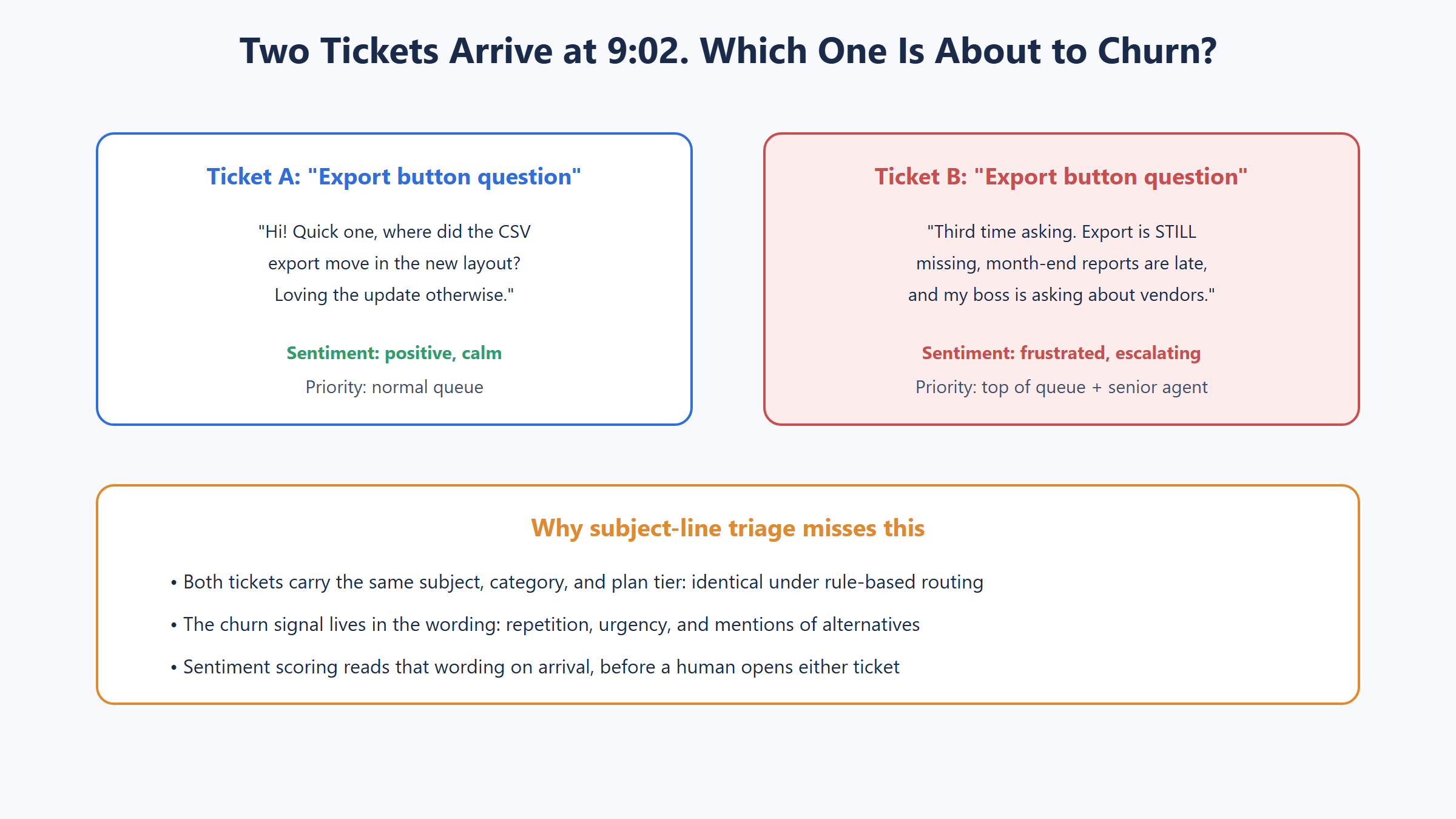
Picture two tickets arriving at 9:02 on a Monday, both titled “Export button question.” One is a cheerful customer asking where the CSV export moved. The other is the same question, third time asked, with month-end reports late and a boss who has started saying the word “vendors.” Under classic rule-based triage, same subject, same category, same plan tier, these tickets are identical, and they’ll wait in the same queue. That gap is what sentiment-based priority closes, and this month’s industry coverage puts numbers on it: teams routing by emotional signal report up to 52% faster resolution on flagged tickets, and the broader AI help desk category keeps posting ROI multiples around 3.7x.
Why the Churn Signal Hides in the Wording
Rules route on what a ticket is about. But churn risk isn’t a topic, it’s a temperature, and it lives in the language: repetition (“third time asking”), deadline pressure (“month-end reports are late”), and the unmistakable sound of alternatives being considered. No category dropdown captures that. The customer certainly won’t set their own priority to “about to leave”: frustrated customers famously understate right up until they’re gone.
Sentiment scoring reads the wording on arrival. It tags the calm question as calm and flags the frustrated one before any human opens either, which means the ten minutes that matter most, the ones between “annoyed” and “done with this company”, get spent on the right ticket.
The honest caveat: sentiment models misread things. Sarcasm, cultural politeness that masks fury, terse engineers who sound angry and aren’t. Which is why the deployments that work treat sentiment as a routing signal, never a verdict. The human who opens the ticket still decides what it needs; the model just decided which ticket got opened first.
Rolling It Out Without Breaking Your SLAs
The failure mode to avoid is letting a new, unproven signal reshuffle a queue that customers already have contractual expectations about. The safe path has four steps.
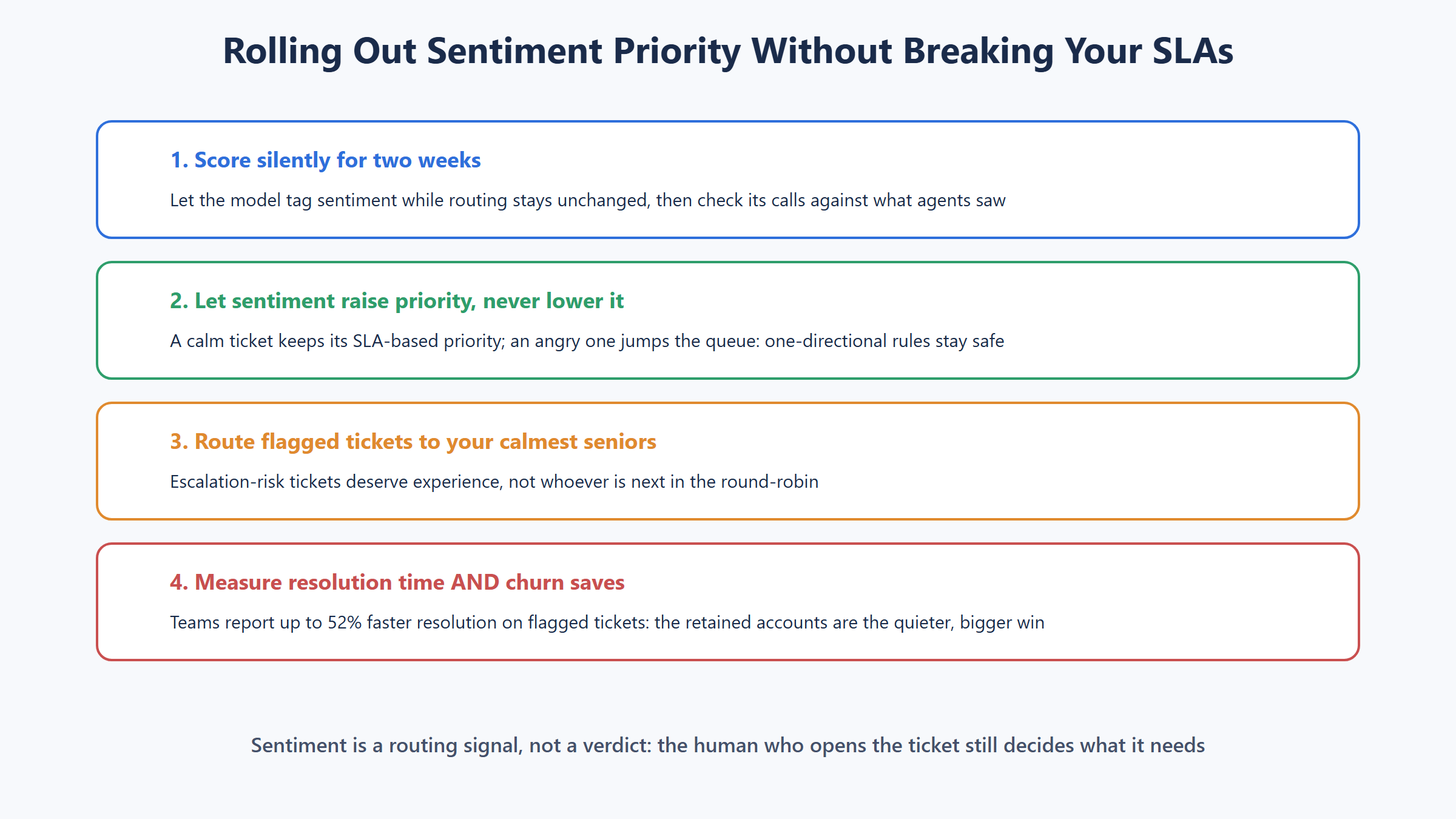
Run it silently first. Two weeks of scoring with zero routing changes, then compare the model’s flags to what agents actually experienced. If it flagged your politely furious enterprise accounts, good. If it mostly flagged customers who use exclamation marks, tune before it touches the queue.
Make the rule one-directional. Sentiment may raise a ticket’s priority, never lower it. Your SLA policies stay the floor for everyone; the flag only lets someone jump the line. One-directional rules can’t create SLA breaches, which makes them easy to approve and easy to trust.
Route flagged tickets to your calmest senior agents, not the round-robin. A frustrated customer who reaches a composed, empowered human on the first touch is the single cheapest churn save in support. Sending that ticket to your newest hire because they happened to be next is how a flag becomes an escalation anyway.
And measure both clocks. Resolution time on flagged tickets is the visible metric, that’s where the 52% figure comes from. The quieter, bigger number is retained accounts: tickets that arrived hot, got handled fast, and renewed anyway. Tag those and total their contract value; that’s the line that justifies the feature.
Where This Fits in the Help Desk Stack
Sentiment priority isn’t a standalone tool; it’s a triage layer inside help desk software that already has queues, SLAs, and routing to act on the signal. We’ve written about the wider AI layer in support, deflection, summaries, suggested replies, in our piece on AI help desk software; sentiment routing is arguably the piece with the best effort-to-payoff ratio in the whole set, because it changes nothing about how agents work. It only changes the order the work arrives in.
My take after watching teams adopt it: the 52% number gets the headlines, but the real product is the Monday morning the support lead didn’t spend firefighting, because the ticket that would have exploded at noon got handled at 9:15. Queues have always been about order. Sentiment just made the order smarter.
FAQ
What is sentiment-based ticket priority?
The help desk scores each incoming ticket’s language for emotional signals, frustration, urgency, repetition, mentions of competitors, and uses that score to influence queue position and routing, alongside existing category and SLA rules.
Does sentiment analysis replace SLA-based priority?
No. The safe pattern keeps SLA rules as the floor and lets sentiment only raise priority, never lower it. Contractual response times stay guaranteed; the flag just moves at-risk customers up within those bounds.
How accurate is ticket sentiment scoring?
Good enough to route with, not good enough to judge with. Models miss sarcasm and cultural politeness, so run a silent scoring period against your real tickets first and keep humans deciding what flagged tickets actually need.
What results do teams see from sentiment routing?
Reported gains include up to 52% faster resolution on flagged tickets and stronger retention on at-risk accounts, with AI-assisted support stacks overall posting ROI figures around 3.7x. Your numbers depend on queue volume and how well thresholds are tuned.
Which tickets should sentiment routing send to senior agents?
Tickets combining negative sentiment with churn markers: repeated contact on the same issue, deadline language, competitor mentions, or high account value. Those benefit most from an experienced first touch.